Research in Cell Signaling & Molecular Medicine
The Goyal Lab investigates poorly characterized protein kinases and disease-associated signaling networks to understand how molecular regulation is translated into cellular behavior and human disease. Our work integrates molecular and cellular biology, protein biochemistry, structural and computational analysis, and disease-focused experimental models.
Molecular mechanism → Cellular signaling → Disease context → Structure-guided interpretation
STK35/STK35L1 Biology
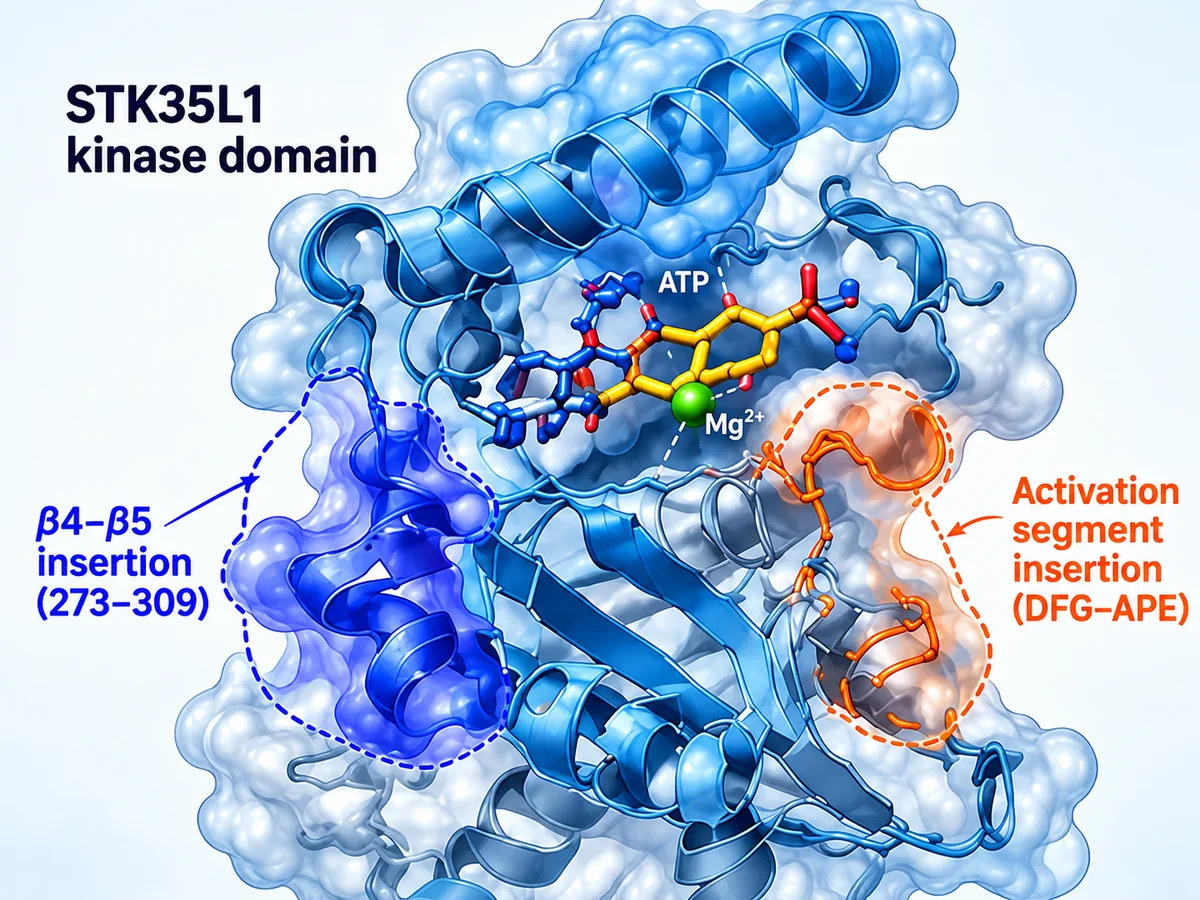
STK35/STK35L1 is the laboratory’s longest-standing research programme. Our work has followed this poorly characterized kinase from its molecular identity and evolutionary relationships through nuclear and cytoskeletal biology, cell-cycle control, migration, host–pathogen interactions, structural regulation and disease-associated signaling.
Published Foundation
Studies from the laboratory have addressed STK35/STK35L1 localization, nuclear-actin association, cell-cycle regulation, migration-related functions and host-cell pathways relevant to liver-stage malaria.
Current Mechanistic Direction
Current work examines kinase-domain architecture, activation-segment regulation, phosphorylation, ATP–Mg²⁺ interactions and conformational dynamics to understand how structural features influence catalytic and signaling states.
Disease Contexts
Cancer, malaria and host–pathogen biology, cell-cycle regulation and reproductive biology provide complementary settings in which STK35/STK35L1 function can be interrogated.
Central question: How does the unusual regulatory architecture of STK35/STK35L1 control kinase behavior, cellular signaling and disease-associated phenotypes?
PDIK1L and Cancer Signaling
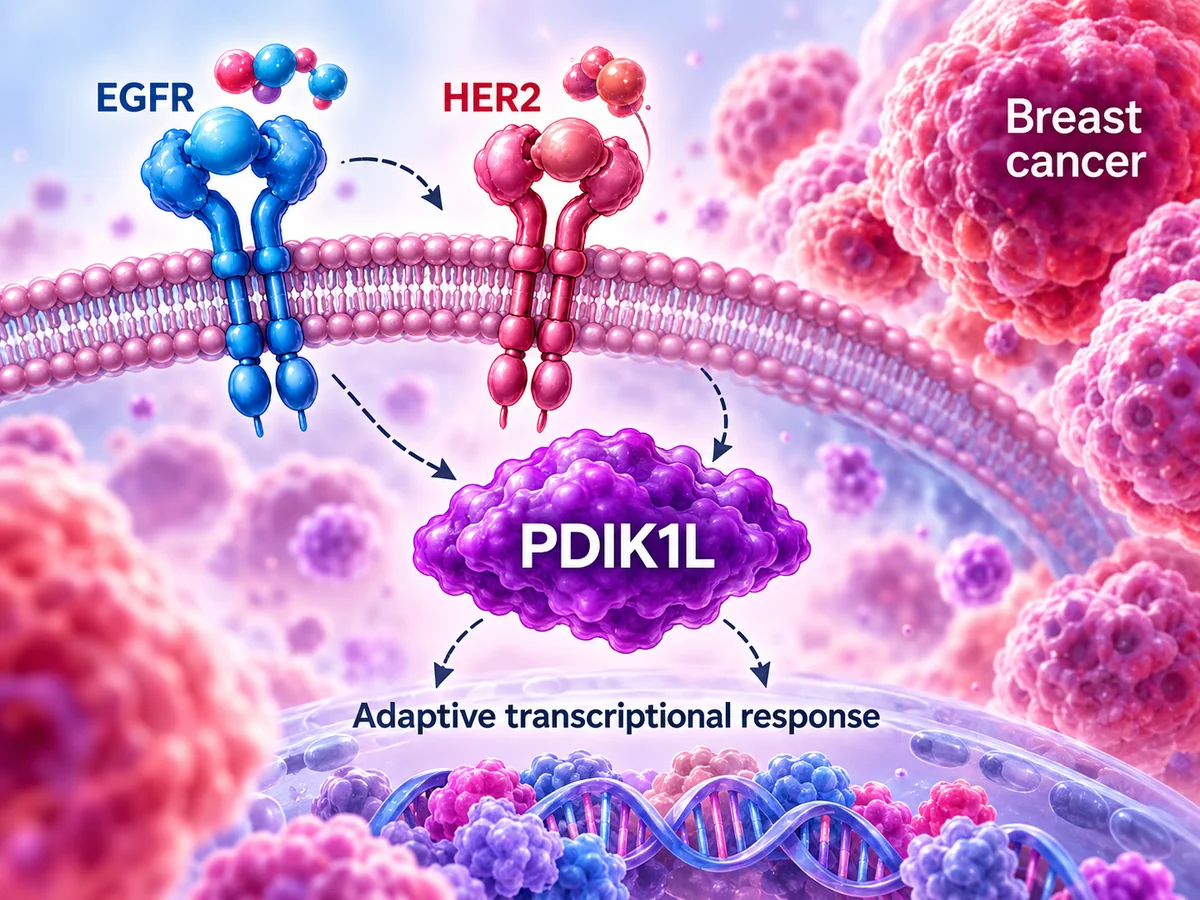
PDIK1L is a poorly characterized serine/threonine kinase whose biological functions remain incompletely understood. Our current work investigates its expression, regulation and signaling context in cancer, with particular emphasis on breast cancer and EGFR/HER2-associated pathways.
Recent studies from the laboratory indicate elevated PDIK1L expression in breast cancer and an adaptive transcriptional response following pharmacological inhibition of EGFR and HER2 pathways. These observations motivate mechanistic studies of pathway context, kinase function and the cellular consequences of altered PDIK1L expression.
Current Questions
- How is PDIK1L regulated in different cancer contexts?
- How does EGFR/HER2 pathway perturbation reshape PDIK1L expression?
- Which substrates, interacting proteins and signaling pathways define PDIK1L function?
- When do STK35/STK35L1 and PDIK1L show overlapping versus context-specific biology?
Structural & Computational Biology
Structural and computational approaches are integrated with experimental biology to resolve mechanism rather than treated as a separate descriptive layer. This programme links sequence, structure, dynamics and disease-associated molecular phenotypes.
Structure–Function Relationships
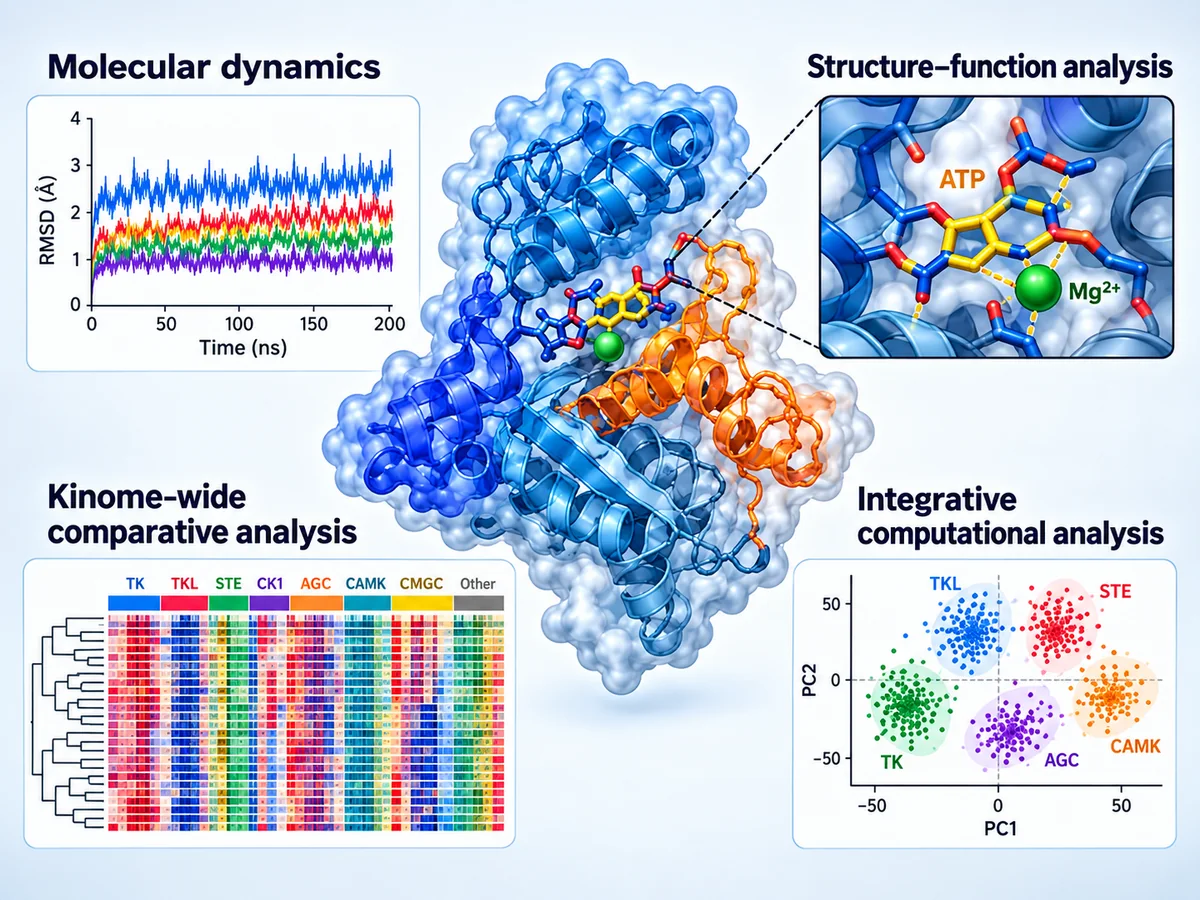
Kinase-domain architecture, catalytic motifs, activation segments, regulatory insertions, phosphorylation sites and conformational states are analyzed in a comparative structural framework.
Molecular Modeling & Dynamics
Structure prediction, ATP/Mg²⁺ geometry, activation-loop dynamics, kinase-spine organization and molecular simulations are used to investigate regulatory conformations and mechanistic hypotheses.
Comparative & Systems-Level Analysis
Kinome-wide sequence analysis, structure-guided alignment, transcriptomic and single-cell analysis, and integrative bioinformatics extend mechanistic questions across genes, cell types and disease contexts.
HUNTER: Discovering Hidden Mitochondrial Proteins
Many proteins reach mitochondria without a classical N-terminal targeting sequence, leaving parts of the mitochondrial proteome unannotated. HUNTER is an AI-driven tool developed in the lab to identify candidate mitochondrial proteins and non-classical targeting signals from sequence. Predictions are followed up experimentally, linking computational discovery to the lab’s work on unconventional protein localization.
Manuscript in preparation.
Disease Signaling & Molecular Medicine
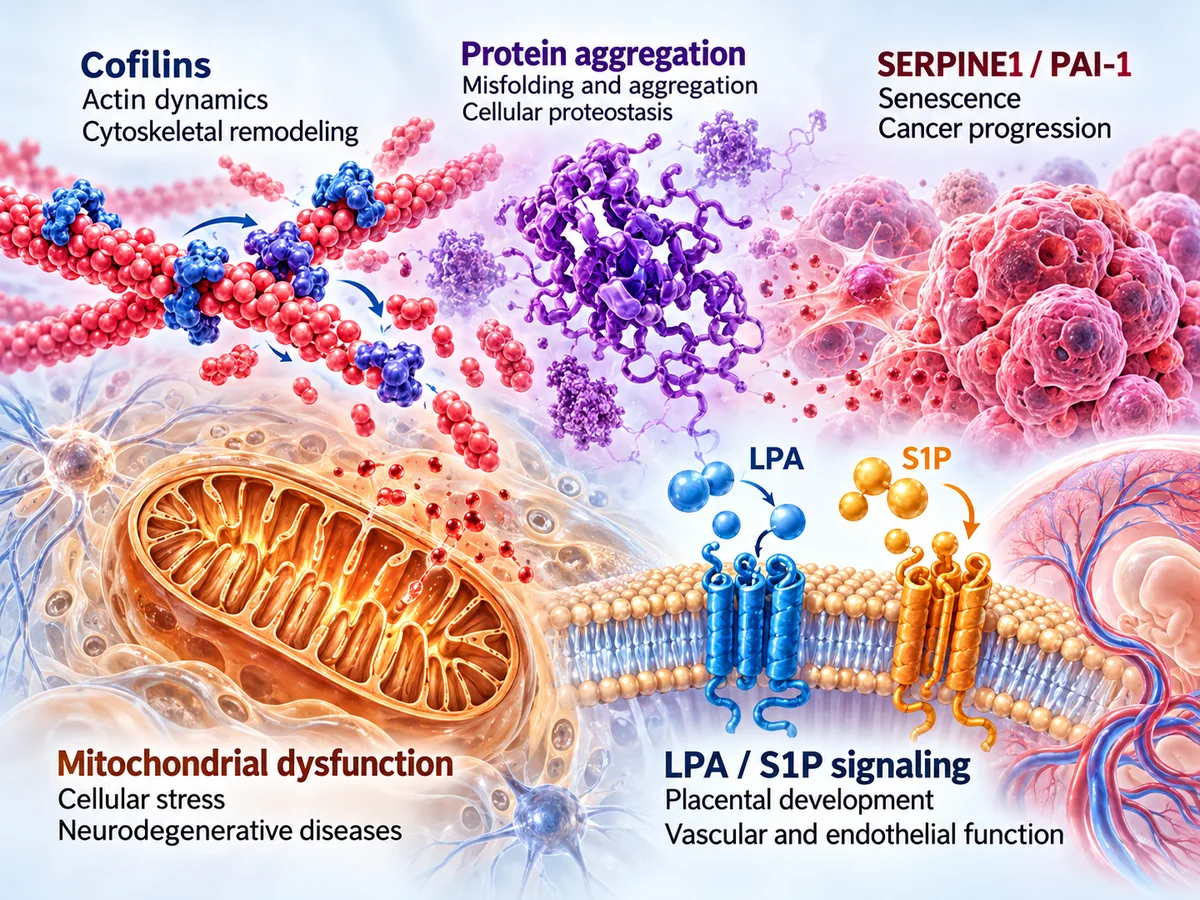
Beyond the kinase programmes, the laboratory investigates how signaling proteins, cytoskeletal regulators and lipid mediators contribute to disease-relevant cellular states. Three established research streams provide complementary models of stress adaptation, protein organization and tissue-specific signaling.
Cofilins, Protein Aggregation & Neurodegeneration
Our work examines actin-regulatory cofilins as stress-responsive proteins, including oligomerization and amyloid-like assembly, oxidative regulation, mitochondrial dysfunction and their potential relevance to neurodegenerative disease.
SERPINE1/PAI-1 Signaling
Research on PAI-1 addresses unconventional intracellular localization, nuclear trafficking and signaling relationships with cellular growth state, senescence/ageing and tumor biology.
LPA/S1P Signaling, Placenta & Vascular Biology
Lysophospholipid signaling is studied in placental development, trophoblast biology, pregnancy-associated disorders, endothelial function and related vascular and platelet responses.
How We Investigate These Questions
Our research combines complementary experimental and computational layers so that molecular observations can be interpreted in cellular and disease contexts.
Molecular & Cell Biology
Molecular cloning, gene-expression analysis, cell signaling, perturbation experiments, biochemical and functional assays, and disease-relevant cellular models.
Protein & Structural Biology
Recombinant protein studies, protein–protein interactions, kinase structure–function analysis, post-translational regulation and protein-aggregation biology.
Computational & Systems Biology
Structural modeling, molecular dynamics, comparative sequence analysis, transcriptomics, single-cell analysis and integrative bioinformatics.
Research Trajectory
The laboratory’s scientific programme has progressively moved from protein discovery and molecular characterization toward integrated questions in disease mechanism, structural regulation and systems-level molecular medicine.
01 · Protein Discovery
Identification, classification and molecular characterization of signaling proteins.
02 · Cellular Function
Localization, interaction networks, cell-cycle control, migration and signaling behavior.
03 · Disease Mechanism
Cancer, infection, neurodegeneration and reproductive/placental biology.
04 · Structural Regulation
Sequence architecture, kinase conformation, phosphorylation and molecular dynamics.
05 · Integrated Molecular Medicine
Linking mechanistic, cellular and computational evidence across disease contexts.
Research Programmes, Projects & Output
The research portfolio is supported by sustained investigator-led and collaborative programmes in STK35L1-dependent host pathways, cofilin and neurodegeneration, lysophospholipid signaling and placental biology, as well as interdisciplinary life-science research. These projects provide the experimental and conceptual framework for the laboratory’s current mechanistic and translational questions.
Peer-reviewed publications span kinase biology, cell signaling, cancer, host–pathogen interactions, cytoskeletal regulation, protein aggregation, placental biology and molecular medicine.
From Molecular Mechanism to Disease Biology
Our research aims to connect fundamental molecular mechanisms with experimentally testable questions in cellular signaling and human disease.